About the series

Welcome to Immortality

Rafael Jones is just starting out as a private investigator after working as a detective for police forces in Buffalo and New York, NY, when...

Showing posts with label #history. Show all posts

Sunday, April 12, 2020

Writing in the Time of COVID

I don't get extra time to write in. I save maybe 20 minutes of commute per day, but I'm desperate to get up and stretch after a 9 hour shift telecommuting. I work for local government, and the work I do keeps the money for vital services flowing. I'm glad I can do this-- it feels like I'm helping the community get through this and having something to do keeps my anxiety under control.

But I am anxious. I have severe asthma, as does my husband. Some other conditions that bump our risk, too, but since inability to breathe is the main killer with this disease, that's where my mind goes. This isn't the first time my health has forced me to be bound up indoors for over a month, but it is the first time I felt so endangered. A bad asthma run usually just leaves me feeling half-dead... which is part of how write the inside view of a vampire's physical existence as being uncomfortable.

Beyond time management and distraction, editing my most recent manuscript, Forever in Deep, pushed me to reveal something sooner than I'd planned about Nicola Durante's family. The 1918 flu pandemic and aftermath had not been something I expected to be so relevant to today when I was working on his background.

Allan's been unable to work from home, but he is working hard. Currently, he's working on the cover for Forever in Deep. (The painting above wasn't done by him, but me. I thought it just seemed seasonal, and it has a book in it.) And he's recording Forever Haunted. 

I hope you are all staying well and safe. This is one strange virus and we still don't know the long term effects on the survivors. Flattening the curve is buying society time to deal with it.

Happy Easter if you celebrate it. Try and enjoy the spring whatever what you can, even if it's just opening some windows and hearing the birds sing.


Wednesday, March 11, 2020

Watch this (approximate) space


I'm looking into ways to make it possible to buy directly from this website, especially with our development of an audio version of the first book. More will follow, but right now, my voice artist has a very bad cold so he can't record right now. (By the way, if you want that quasi-antique phonograph, I found it a Kohl's ad)

I know a lot of people would rather buy directly from a creator than a large corporation, and I've found out Audible is a pretty expensive resource for audiobook listeners, so we want to make options available. We will also have CD sets available and I'd like for people to be able to buy signed books without having to take the initiative and hit Contact Me (but totally contact me if you want a signed copy). Maybe a pdf download purchase option, too. After all, the easier it is for readers to get their books instead of having to open extra tabs, the better, right?

Saturday, January 25, 2020

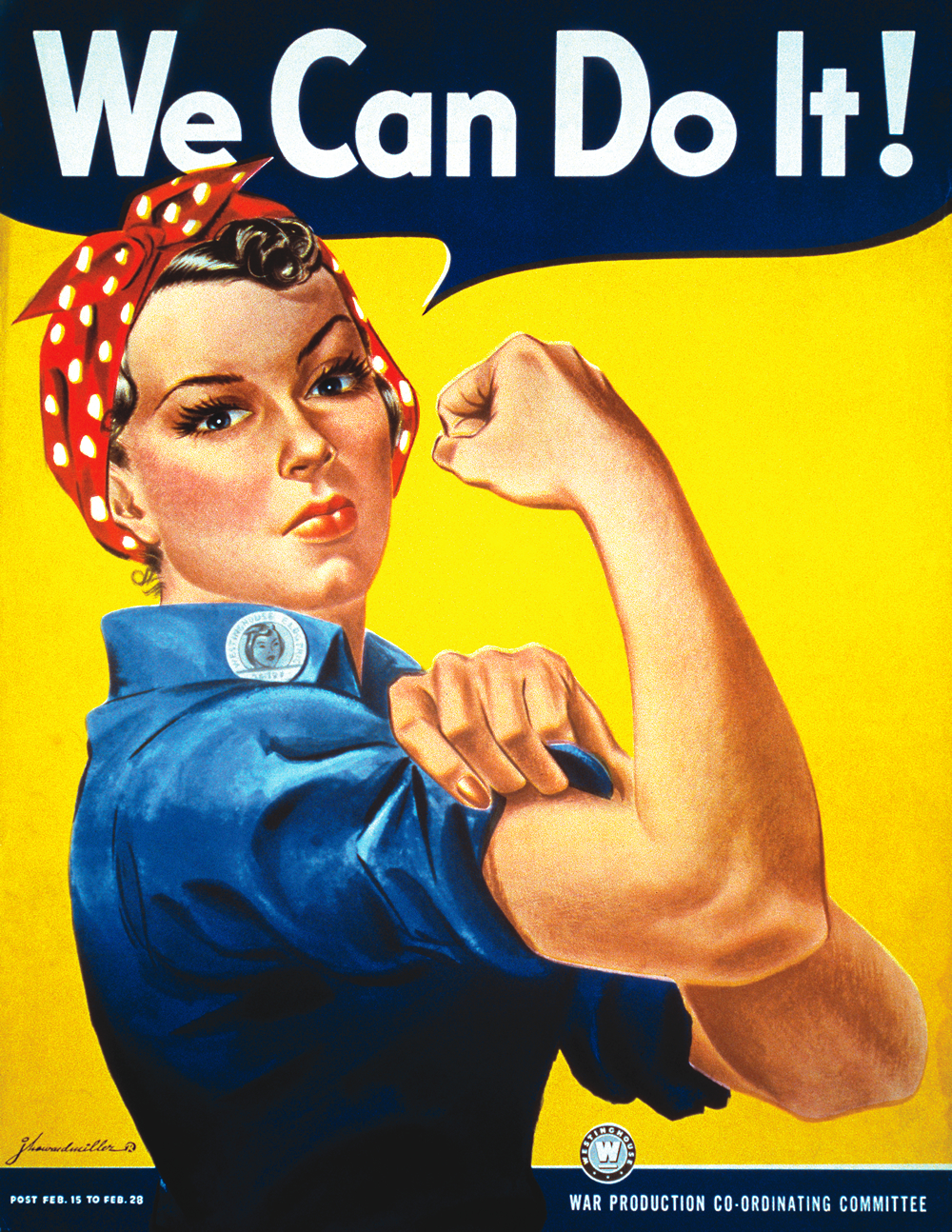
A woman's place is as the author


Even though my books are genre novels, not feminist writings, and even though the main character is male, being a feminist has had a lot of influence on them. 

One reviewer mentioned for Forever's Too Long, "I especially appreciated the way that the female characters (both heroes and villains) were fully formed, intelligent, and autonomous - delightfully atypical of the genre." I've kept that going with women who have their own sense of purpose, their own careers (including uncommon ones), references to problems both historical and ongoing, etc. That won't go away. 

And there won't be any nonsense of having strong women just so the man can prove himself even stronger by conquering them/putting them in their place. Rafael won't slap a woman to cure her hysterics. He's not weak enough to need that. 

No, my hero gets to have real, meaningful, supportive friendships. He experiences fear and disappointment, wistfulness and hope, affection and joy. He sees beauty as well as darkness in the world. He has time for introspection as well as action. You wouldn't think it would take feminism to write a well-rounded male character, but a lot of male writers are steered by growing up with toxic masculinity. 

But he is emotionally vulnerable-- that's another side to feminism. Allowing men to have a full range of emotions, not just anger, resentment, and pride (wait, wrath, envy and pride are almost half the deadly sins right there). Why do men hate men so much? 

Finally, feminism has been intersectional for most of its history. Seneca Falls meetings dealt with abolitionism and feminism both. Abolition took priority for feminists in terms of action, because of the severity, but once the Civil War was won, women's suffrage was the next big thing for many activists. Social work began because of women with education and influence becoming involved with immigrant and impoverished communities and seeing a need for political policies and trained workers to pave paths to a better life for the marginalized. 

So, my women's history course dealt with a lot of racial concerns, too. I've researched it and read widely outside of feminist writing on race, but there are a lot of connections.

Tuesday, May 28, 2019

Countdown to release: a little bit different than the other detectives.

I promised to get into why I decided to do a Latino detective. Here's the thing. The detective fiction writers contemporary to this story were white men and their detectives were white men. There's nothing wrong with white men-- if I didn't enjoy reading about Archie Goodwin, Phillip Marlowe, Nick Charles, and even The Shadow, I don't think I'd be writing this kind of story myself.

But white guys are only part of the population. Oh, the writers were often aware of that. Rex Stout's politics sometimes entered his stories, with Nero Wolfe getting quite irate over the disrespect blacks face in America. I think Stout cared about women's opportunities, too, and he found at times stifled by giving both Wolfe and Goodwin some sexist traits, having to write around it with women executives and intelligence agents stealing the spotlight now and then. And Stout loved using Wolfe's status as an immigrant as a reason to do stories involving the complications that could cause for less successful people. Maxwell Grant uses the larger cast of The Shadow novels to introduce characters who defy demographic stereotypes, and sometimes upturns a whole slew of slanders at a time, as with the Roma in "The Gypsy Curse".

So it's not like the genre didn't have writers trying to expand their reader's minds. Justice, including social justice, is one of the things that is so appealing about the mystery genre. Still, history is a big canvas to paint on, and oddly enough, it's still painted mostly in white. Setting books in the past, and creating a more diverse cast that would have been written in similar books, gives me a chance to explore aspects of American life that were often ignored.

As a Latino, Rafael doesn't face the level of exclusion that black people often did, but he's still got to work around the fact that people see him as different. Sometimes with works to get him in better with people who might normally be suspicious of a detective. Sometimes he's been stalled by people who don't see him as "our kind". Facing obstacles himself probably makes him more aware of how women were blocked back then, as well. All in all, he's in a good position to observe inclusion and exclusion, and I can bring up points without getting heavy-handed about it.

Besides, I'm only scratching the surface in the first book, and the political perspective isn't the whole of it. Eventually, his Mayan heritage is going to be very plot-relevant. See, the other reason it's cool to give him some non-European heritage is that every group has its own folklore, traditions, and monsters. While the first book deals with one of the most used of magical creatures, there will be less common ones as the series progresses.

Wednesday, April 24, 2019

Dedicated to those who remember


When I write about the not-too-distant past, I’m writing about someone’s lifetime. Part of my interest in jazz and pulp detective stories come from my parents. My father, in particular, loved music, and had a large collection of jazz and classical pieces that were part of the background of life. Mind you, the post-swing era of crooner and do-wop were more part of his personal timeline, but every generation picks up things from the generation before.
Detective stories have never really gone out of style. My parents had a large collection, and the local library had plenty as well. While many wonderful stories are being told in present day, the works of Raymond Chandler, Rex Stout, and others, will always have a place on a well-stocked shelf. Although some people may be put off by out of date social mores, a discerning reader will see some of the writers were pushing against prejudices few people talked about at the time. It also grounds the modern writer who wants to write about times past. Kerry Greenwood, the author of the Miss Fisher mysteries, does a wonderful job connecting with issues of the past that are relevant today. In a sense, one can ‘remember’ things by proxy.
The classic movies, often in black-and-white, played as filler on TV in much of my childhood, although they were preserving a time I never lived through. But the vivid emotion of the acting and high suspense of the stories drew me in and made me feel as though I were there. While some parts of Forever’s Too Long draw on more recent sources, the pop culture of the time is referenced in many ways.
But would it ring true to someone who had been there in person? I may never learn. The generation of my grandparents and their siblings is disappearing. I lost my great-aunt recently, and while I mostly thought back to happy memories of her, and what a swell woman she was (Eugene’s friendship with Rafael may have been subconsciously influenced slightly by having a very successful relative who never treated anyone different due to economic status), I also thought, I wish that my book had come out in time for her to read it.
Here’s to the ‘Greatest Generation” and the ones before and after, that expanded the American middle class, started a sense of multiculturalism (what else can one consider jazz to be?), adapted wonderfully to changes in technology and social structures, and shaped systems that improved world peace. Thanks for the memories.